
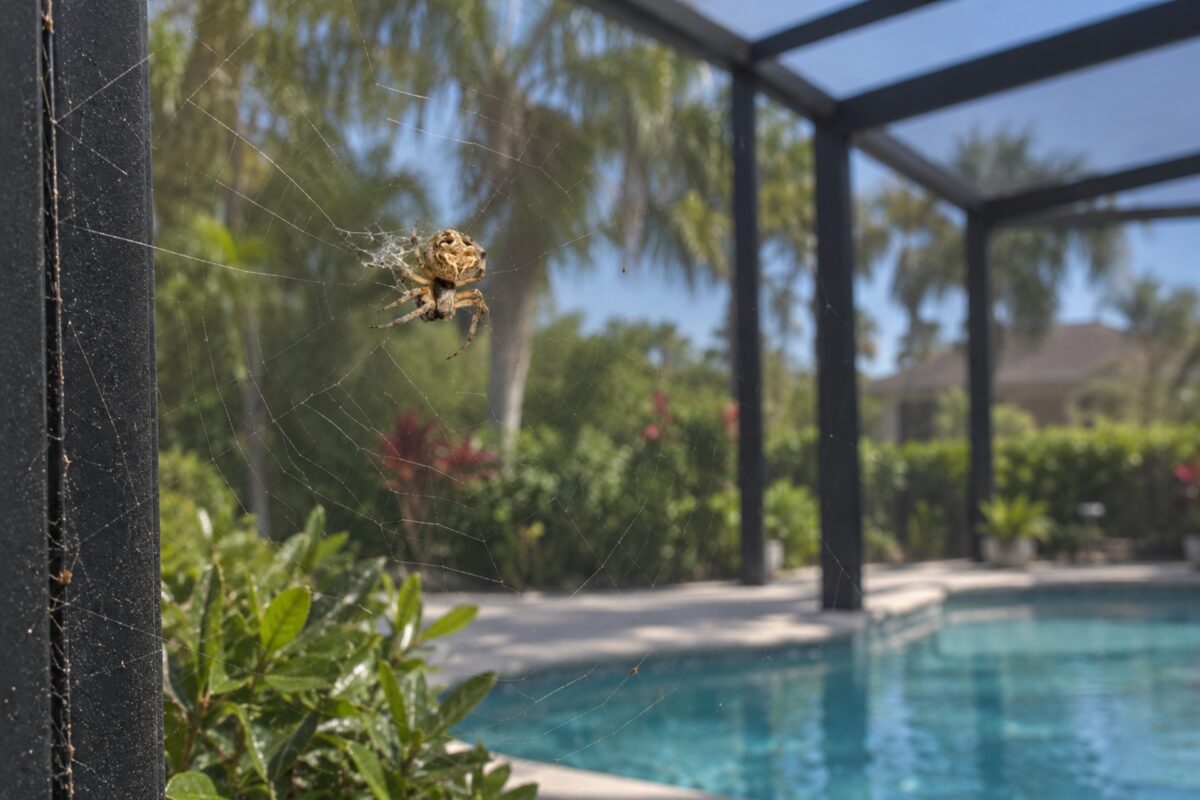
Spiders around a Central Florida pool cage usually gather where the enclosure gives them steady access to flying insects, protected attachment points, and quiet corners. Webs may return soon after cleaning when the insects and shelter that attracted the spiders remain. At Gato Lawn & Pest Control, we provide spider control across Orlando and Central Florida that addresses spiders, accessible webs, and the insects they feed on.
Why Screen Enclosures Attract Web-Building Spiders
A pool cage creates a large framework with beams, corners, screen seams, doors, and roof panels. These surfaces give web-building spiders many places to anchor silk. The screen also intercepts moths, mosquitoes, midges, and other small insects moving through the yard.
Outdoor lighting can concentrate insects near the enclosure after dark. Light from the pool, patio, lanai, and nearby windows may draw insects toward screens and entry doors. Spiders then settle where air movement carries prey past a strong attachment point. A web repeatedly built in the same upper corner often reflects a good feeding location rather than a spider choosing the pool itself.
Water and Landscaping Influence Insect Numbers
Pools, damp deck joints, clogged gutters, decorative planters, irrigation, and nearby vegetation can affect the number of insects around an enclosure. Standing water in a neglected container can support mosquito development, while wet organic material may attract other small insects. Dense plants touching the screen give insects and spiders another path onto the structure.
Walk the outside perimeter and look for overgrown shrubs, palm fronds, vines, leaf litter, and stored items resting against the mesh. Trim vegetation enough to maintain a clear inspection space without damaging the screen or surrounding plants. Correct irrigation that continually wets the same deck edge or foundation area. These changes reduce shelter and make new webs easier to notice.
Web Location Offers Useful Clues
The shape and location of a web can help explain how a spider is using the enclosure. Large circular webs stretched across open space catch flying insects. Messy cobwebs in protected corners may remain in place longer. Spiders that hunt without a capture web may be found beneath furniture, near door tracks, or along the lower frame.
A photograph is safer and more useful than reaching into an occupied web. Include the spider and the web when possible, and take the picture from a comfortable distance. Color alone is a poor identification method because lighting, age, and individual variation can change appearance.
Florida has medically significant widow spiders, although many spiders around homes pose little risk and help consume insects. Keep children and pets away from a spider you cannot identify. Gloves are appropriate when moving outdoor furniture or stored items, and shoes should be shaken out if they have been left on a lanai.
Safe Cleaning Can Reduce Web Buildup
Use a long-handled web brush or vacuum attachment to remove reachable, unoccupied webs and egg sacs. Work during daylight so corners and door tracks are visible. Avoid climbing on patio furniture or using an unstable ladder near the pool. High enclosure panels are better handled with equipment suited to the height.
Regular cleaning interrupts repeated web building, but cleaning alone may have limited effect when insects remain abundant. Check door sweeps, torn mesh, gaps around utility lines, and loose screen edges. Repairing these openings reduces movement into covered seating areas and the home.
Exterior lights may be adjusted so they shine away from doors and gathering spaces. Use the amount of light needed for safe movement around the pool and choose fixture placement that limits direct attraction to the screen. Any electrical work near water should be handled by a qualified professional.
Treatment Has to Fit an Outdoor Living Area
Pool cages include water, drains, furniture, toys, plants, food-service surfaces, and places where people and pets spend time. Product selection and placement need to account for those conditions. Broad household spraying across screens and decks can create unnecessary exposure and may miss the cracks and protected locations spiders use.
A technician can inspect the enclosure, identify where insects are collecting, remove accessible webs as part of the service when offered, and target appropriate areas according to the product label. The plan may also address pests around exterior lights, eaves, landscaping, and doors. Reducing the spiders’ food supply often contributes to a longer improvement than treating visible spiders alone.
When Recurring Webs Call for an Inspection
An occasional outdoor spider is expected in Central Florida. An inspection is useful when webs return quickly throughout the enclosure, spiders are entering the house, egg sacs are accumulating, or you find a species that may pose a health concern. The technician can separate a general outdoor spider issue from a specific indoor entry problem.
We can evaluate the pool cage, surrounding landscaping, lighting, and openings that contribute to repeated spider activity. If webs keep taking over your Central Florida screen enclosure, contact Gato Lawn & Pest Control to arrange an inspection and mention whether the spiders are staying outside or moving into the home.