
Orlando homeowners battle multiple ant species throughout the year, each with unique characteristics, nesting habits, and challenges for control. Understanding which ant species you’re dealing with is the first step toward effective elimination, since treatment strategies that work for one species may be ineffective against another. Knowing the most common ants in Central Florida helps you identify your invaders and understand why professional pest control is often necessary for complete elimination.
Argentine Ants: The Super-colony Invaders
Argentine ants are small, light to dark brown ants that form massive super colonies containing thousands of queens and millions of workers. These ants are one of the most common and persistent ant problems in Orlando because their colony structure makes them extremely difficult to eliminate.
Unlike most ant species that have territorial colonies competing with each other, Argentine ant colonies cooperate, forming interconnected networks across entire neighborhoods. When you kill ants in one area, workers simply flow in from other parts of the massive colony to replace them.
Argentine ants form trails to food sources, often invading homes in large numbers. They’re attracted to sweets but will eat almost anything. Their nests are typically shallow and located in soil under mulch, stones, or debris, but they also nest in wall voids and other protected locations in structures.
Ghost Ants: The Tiny Kitchen Invaders
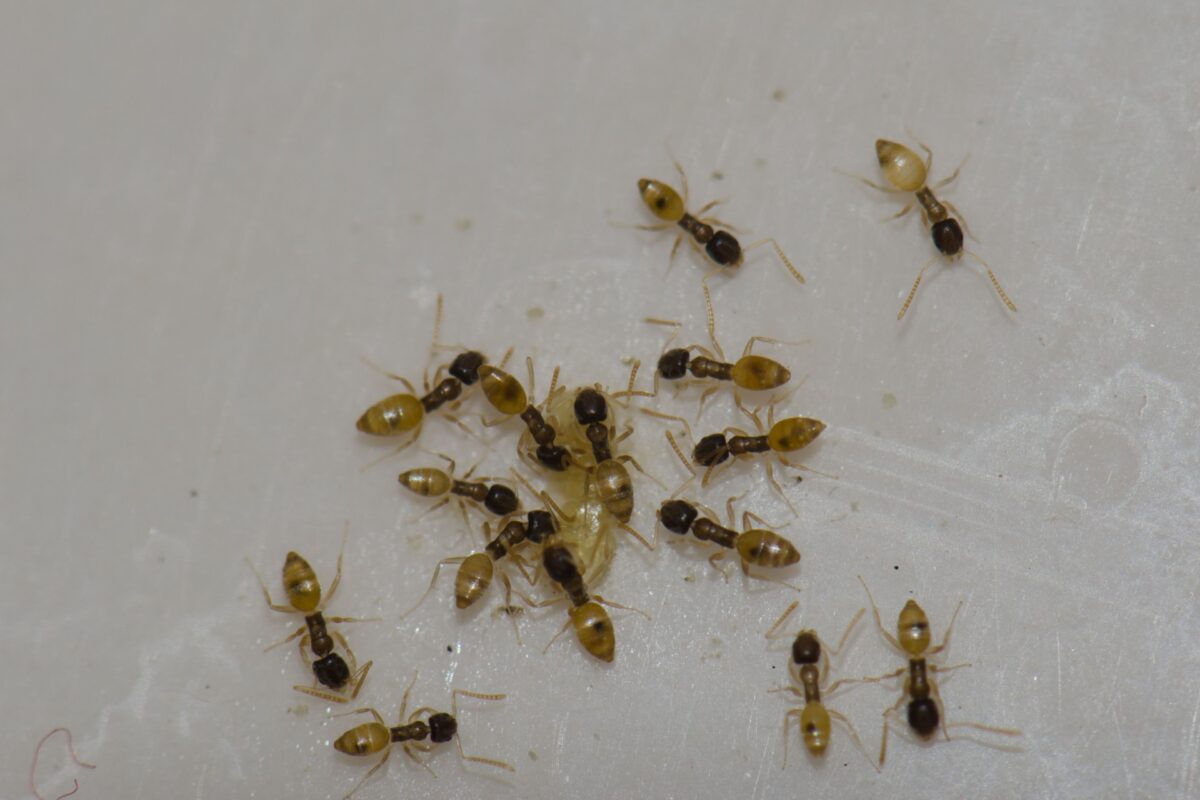
Ghost ants are extremely small ants with dark heads and pale, nearly translucent abdomens and legs—hence their name. They’re one of the most common indoor ants in Florida, frequently found in kitchens and bathrooms where they’re attracted to moisture and sweets.
Ghost ant colonies are polycentric, meaning they have multiple queens and can split into satellite colonies easily. This makes control challenging because treating one nest doesn’t eliminate the entire colony. These ants nest in potted plants, wall voids, behind baseboards, and in other concealed locations indoors and outdoors.
Ghost ants create noticeable trails along baseboards, countertops, and windowsills as workers forage for food. Their tiny size allows them to enter homes through the smallest cracks and gaps, making exclusion difficult.
Carpenter Ants: The Wood-Damaging Threat
Florida carpenter ants are large black ants that excavate wood to create nesting galleries. While they don’t eat wood like termites, the damage they cause can be significant over time. Carpenter ants prefer moist, rotting wood for initial nest establishment but will expand into sound wood as colonies grow.
These ants are most active at night, often going unnoticed until colonies become large and winged reproductive ants appear during mating flights. Signs of carpenter ant activity include piles of wood shavings (frass) beneath infested wood, rustling sounds in walls, and sightings of large ants trailing to and from the structure.
Carpenter ant colonies typically nest outdoors in stumps, logs, or landscape timbers, sending foraging workers into homes for food. However, they also establish satellite nests indoors in wall voids, particularly in areas with moisture damage or wood rot.
Fire Ants: The Painful Outdoor Nuisance
Red imported fire ants are aggressive, reddish-brown ants that build distinctive dome-shaped mounds in yards and landscaped areas. While they typically nest outdoors, fire ants sometimes invade homes, particularly when outdoor conditions become unfavorable due to flooding or drought.
Fire ants are notorious for their painful, burning stings that leave raised white pustules. They attack in large numbers when their mound is disturbed, making them hazardous for children, pets, and anyone working in the yard. Fire ant colonies contain 100,000 to 500,000 workers and multiple queens.
Control requires treating both visible mounds and the underground colony. Fire ants also create satellite mounds, so treating only the visible mounds you see rarely eliminates the entire infestation.
Why Professional Identification Matters
Accurately identifying which ant species you’re dealing with determines the most effective control strategy. Some ants respond well to bait treatments while others require direct nest treatment. Some species have single queens while others have multiple queens in polycentric colonies. Nesting sites, food preferences, and colony behavior all vary by species.
Professional pest control technicians are trained to identify ant species based on appearance, behavior, and nesting characteristics. They understand which treatment methods work for each species and can design control programs that address your specific ant problem.
Comprehensive Ant Control
Effective ant control goes beyond just killing the ants you see. Complete elimination requires identifying and treating nest locations, eliminating food and water sources that attract ants, and creating barriers that prevent new colonies from invading. Different ant species require different approaches, which is why professional expertise makes such a difference in achieving long-term control.
Gato Lawn & Pest Control has extensive experience with all ant species common to Central Florida, using species-specific treatment strategies that eliminate entire colonies rather than just surface workers. Contact Gato Lawn & Pest Control for professional ant identification and comprehensive control that keeps your Orlando home ant-free.